Microcement in Modern Interiors: Where It Works Best
Where Microcement works well in a modern home, where it does not, and what preparation it needs to last in Toronto bathrooms, kitchens, floors and stairs.

Microcement suits modern interiors where you want one continuous surface across floors, walls, stairs or built-ins, with no grout lines. It works best in bathrooms, kitchens, open-plan floors and stairs. It is a poor fit over unstable or cracked substrates, and it needs a full layered system with primer, base coats and sealer.
What is Microcement?
Microcement is a cement-based decorative coating applied by trowel in several thin layers. A complete system has a primer, base coats, fine finish coats and a protective sealer. The finished surface is about 2 to 3 mm thick, so it can go over existing tile, concrete or cement board without raising floor heights much or removing what is already there.
The "no grout lines" look describes the surface. The building underneath still moves, so control joints, corners and changes in material need planning before any coat goes on.
Where Microcement works well
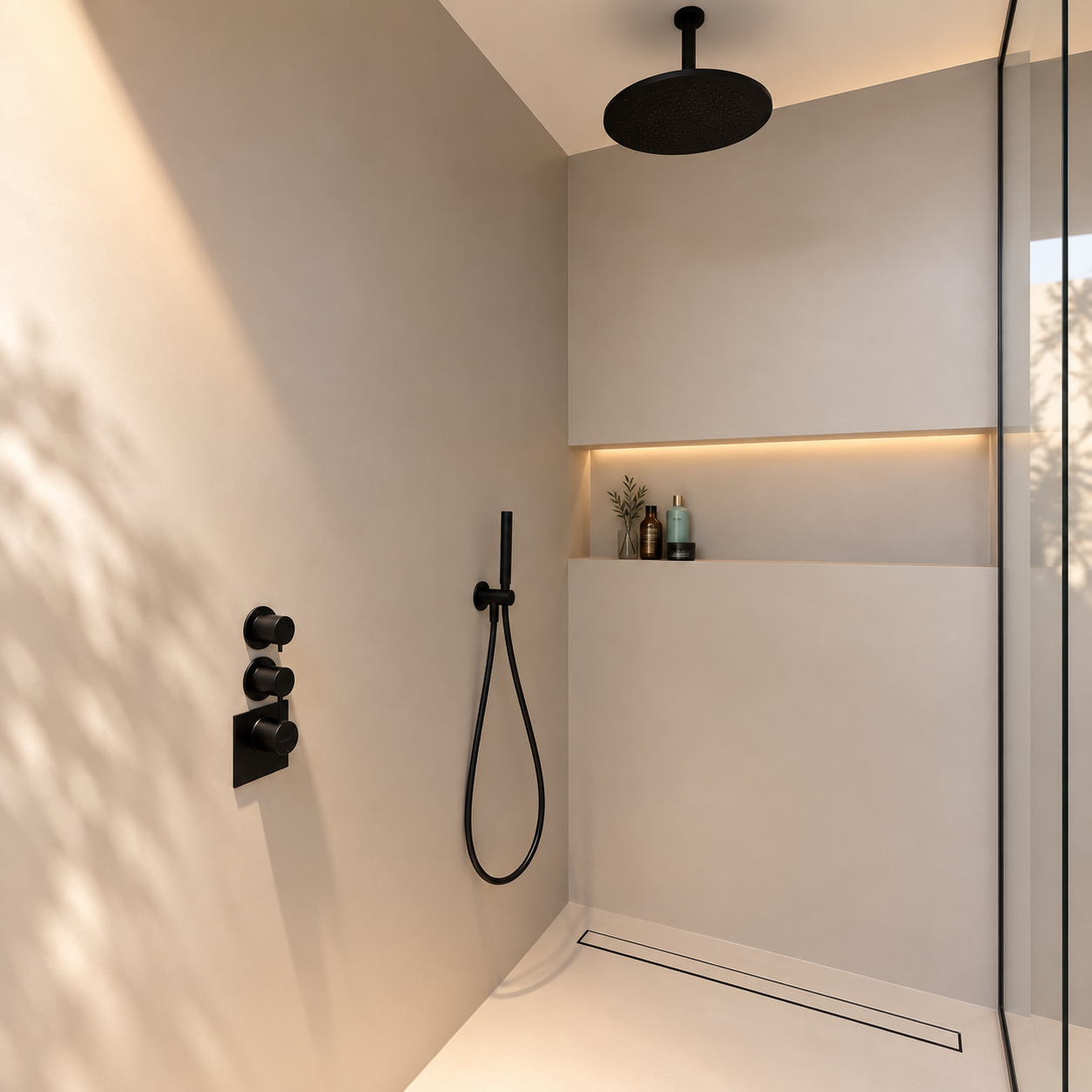
Bathrooms and walk-in showers
This is the most common use in Toronto homes. Floor, shower walls, niches and vanity can share one tone. In wet areas the decorative layers sit on a waterproofing membrane and a sealer rated for showers. Microcement on its own is not a waterproofing layer.
Floors and open-plan rooms
A single floor that runs from the kitchen into the living room makes a space look larger. It needs a sound, flat base, and any movement joints in the slab have to be carried through.
Kitchens
Islands, range hoods, backsplashes and floors can all be finished in Microcement. Near the cooktop and sink, a harder sealer and regular wiping keep oil and acidic spills from marking the surface.
Stairs, niches and built-ins
Microcement wraps over stair treads and risers without metal nosings, and it can finish benches, shelves and fireplace surrounds in the same material as the walls.
Why preparation matters
Most Microcement failures start below the surface. Before applying anything we check that the substrate is solid, dry and clean. Loose tiles are fixed or removed, cracks are repaired, and the right primer is chosen for each material. Skipping this step is the usual reason for hairline cracks or tiles showing through months later.
Day-to-day care
Clean with warm water and a pH-neutral cleaner.
Avoid bleach, vinegar and abrasive pads, which wear down the sealer.
Wipe up wine, coffee and oil before they sit.
Plan for a fresh coat of sealer every few years on floors and kitchen surfaces.
When Microcement is not the right choice
Skip it if the floor has active structural movement, if the slab has moisture problems that have not been solved, or if you want a perfectly uniform factory look. Microcement is applied by hand, so it has soft variation in tone. Some people love that. Others prefer large-format porcelain.
Microcement compared with paint and tile
Paint is cheaper but marks easily and cannot go on floors. Tile is very durable but brings grout lines that need cleaning and resealing. Microcement sits between the two: it costs more than paint, gives a continuous look tile cannot, and needs a sealer maintained over time.
Choosing who applies it
Ask to see finished projects, ideally in person, and ask which system and sealer will be used for each room. A good applicator will also tell you where Microcement is a bad idea in your home. You can browse our recent projects or the Microcement catalog for colours and textures, then request a free quote with photos of your space.
Frequently asked questions
Can Microcement go over existing bathroom tiles?
Yes, if the tiles are firmly bonded and the surface is sound. Grout lines are filled, a bonding primer is applied, and a mesh-reinforced base coat stops the tile pattern from showing through.
Is Microcement waterproof?
The sealed surface resists water, but Microcement is not a waterproofing layer by itself. In showers it is applied over a waterproofing membrane and finished with a sealer rated for wet areas.
How thick is Microcement?
A finished system is usually about 2 to 3 mm thick, including the base coats, finish coats and sealer.
How do you clean Microcement floors?
Use warm water with a pH-neutral cleaner and a soft mop. Avoid bleach, vinegar and scouring pads, and reseal high-traffic floors every few years.