
Answers
Frequently asked questions
Cost, process, materials, timing and care: what we are asked most about Microcement, Venetian Plaster and Limewash Paint in Toronto.
Limewash Paint
Why does Limewash Paint look cloudy?
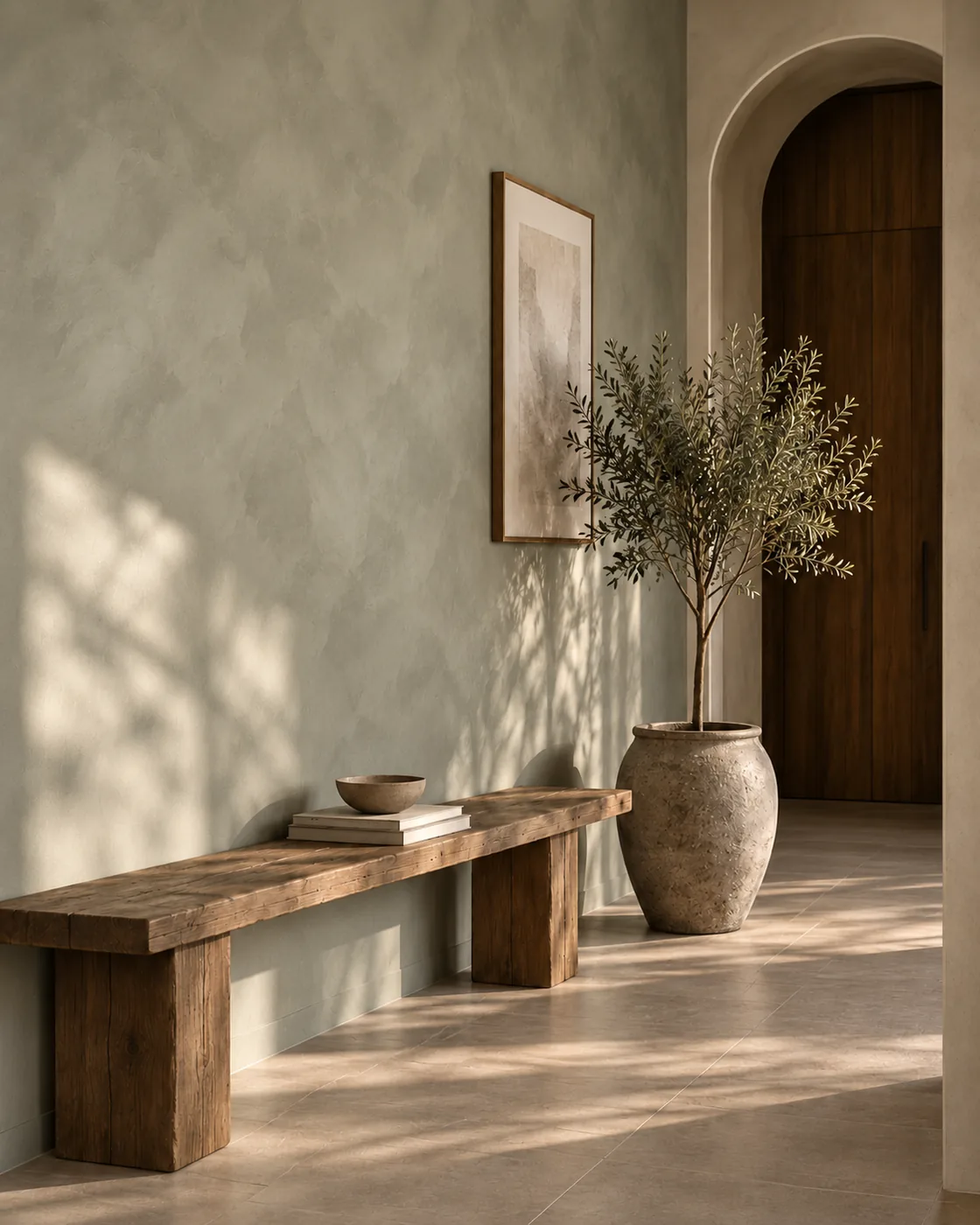
Limewash is brushed on in loose, crossing strokes. As each coat dries, the lime lightens and settles unevenly, which gives soft variation in tone instead of one flat colour.
Is Limewash Paint safe for bedrooms and nurseries?
Yes. Limewash is made from lime, water and mineral pigments, with very low or zero VOCs and little smell once dry. It is also breathable and resists mould.
Can Limewash Paint be touched up?
Yes. Small marks are touched up with paint from the original batch, feathered in with a brush, and blend into the surrounding wall.
Can Limewash go over painted drywall?
Yes, after preparation. We apply a mineral primer that gives the Limewash a porous surface to bond to.
Microcement
Why is Microcement good for bathrooms and wet rooms?
Microcement has no grout lines, so there is nowhere for soap scum and mould to collect. In showers it sits on a waterproofing membrane and is finished with several coats of a sealer rated for wet areas, which makes it easy to wipe clean.
How thick is Microcement, and can it go over existing tiles?
A finished Microcement system is about 2 to 3 mm thick. It can go over sound, well-bonded tile, concrete, cement board and prepared drywall, so door clearances and floor heights barely change.
How durable is Microcement on floors?
Sealed Microcement handles normal household foot traffic, pets and spills well. The sealer takes most of the wear, so busy floors are resealed every few years to keep them protected.
How do you clean and maintain Microcement?
Use warm water and a pH-neutral cleaner with a microfibre mop or cloth. Avoid bleach, vinegar and abrasive pads. Renew the sealer every few years on floors and kitchen surfaces.
Venetian Plaster
What is the difference between real Venetian Plaster and faux finishes?
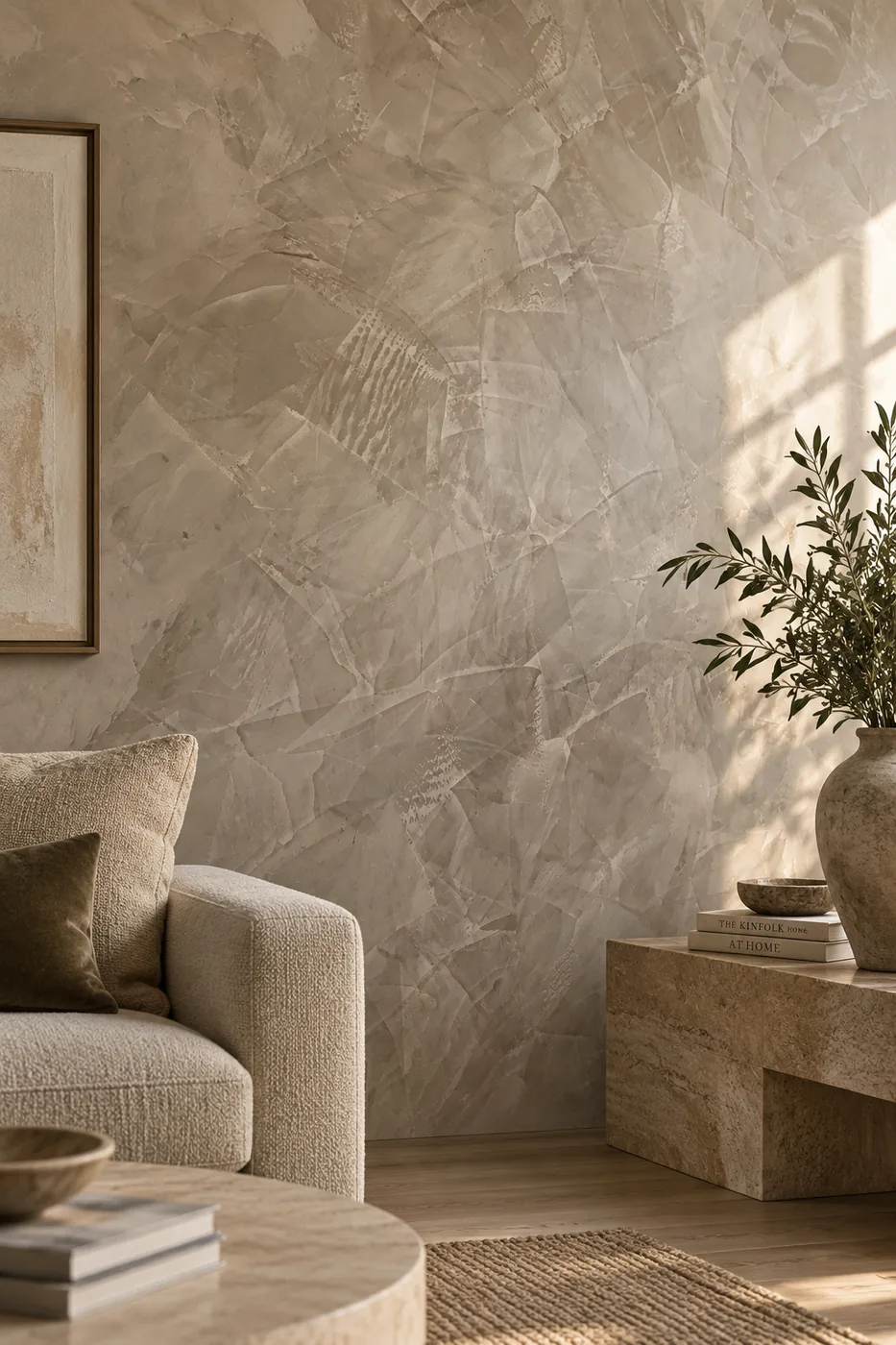
Real Venetian Plaster is made from slaked lime and marble dust. As it cures, the lime hardens back into a stone-like layer with depth and a cool, smooth feel. Faux finishes are paint or acrylic products that imitate the look but not the depth or the way it ages.
Can Venetian Plaster be used in humid rooms?
Yes, on walls away from direct water. Lime is alkaline, which resists mould, and a wax or traditional soap finish helps the surface shed splashes. It suits powder rooms, bathroom walls outside the shower and ceilings with good ventilation.
What types of Venetian Plaster finishes do you offer?
Polished Venetian Plaster with a high sheen, matte or satin Marmorino, and textured stone-like finishes. We make samples of each in your room so you can compare them.
Can Venetian Plaster be repaired if it is scratched?
Yes. Light marks often buff out with a soft cloth and wax. Deeper damage is filled with matching plaster and burnished so it blends into the wall.