What Is Limewash Paint and Why Is It Popular in Toronto Homes?
Limewash is a natural lime paint that dries to a soft, cloudy matte. What it is made of, why Toronto homeowners choose it, and where it works best.
Limewash Paint is a natural mineral paint made from slaked lime, water and earth pigments. It soaks into porous walls instead of forming a plastic film, and dries to a soft, chalky matte with cloudy variation in colour. Toronto homeowners like it for its calm, European look, its low VOC content and the way it changes with daylight.
What Limewash is made of
Traditional Limewash is lime that has been burned, slaked with water and aged into a putty, then thinned and tinted with mineral pigments. Modern versions sometimes add a small amount of binder to improve adhesion on drywall. There are no acrylic resins forming a film on top.
How it looks
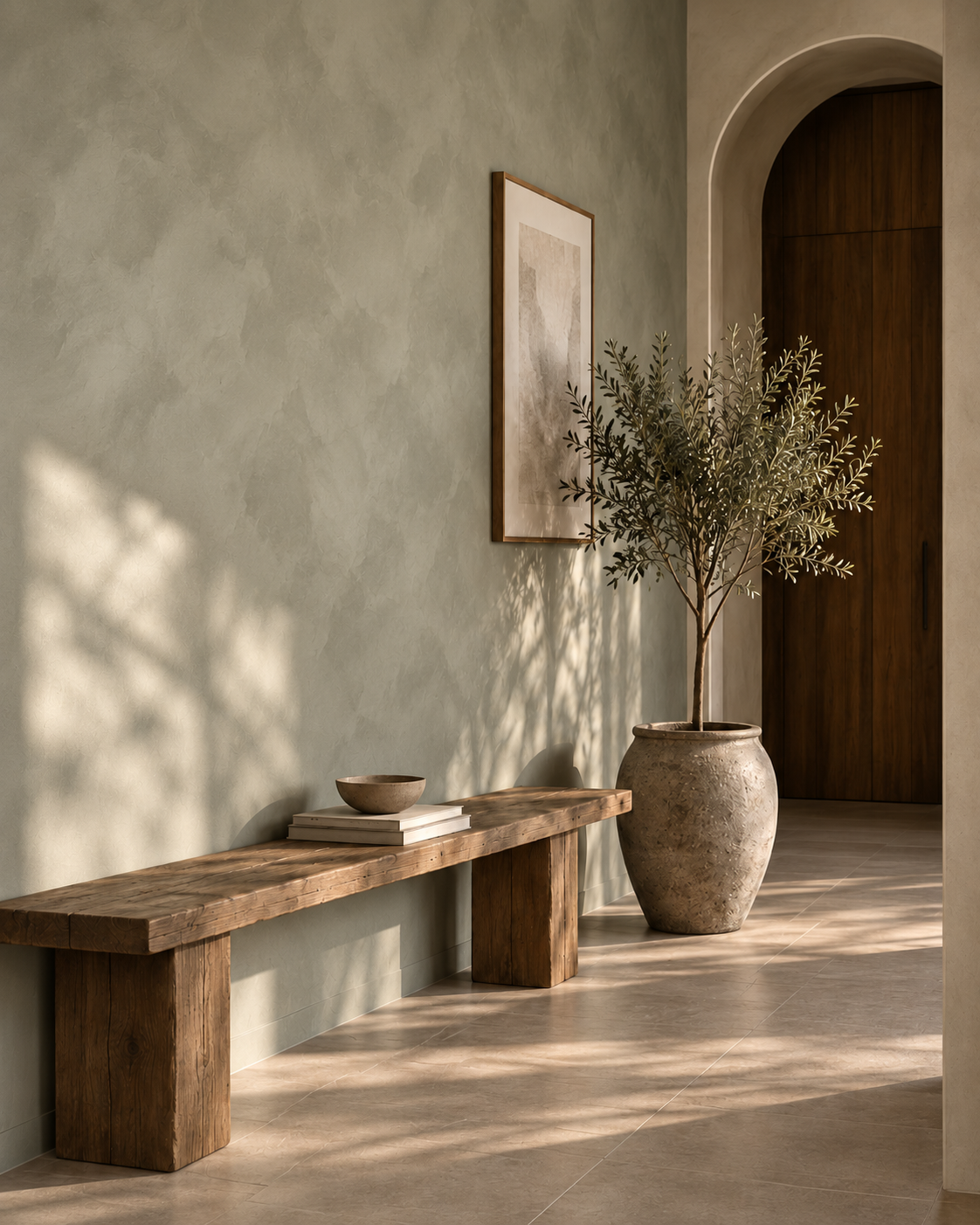
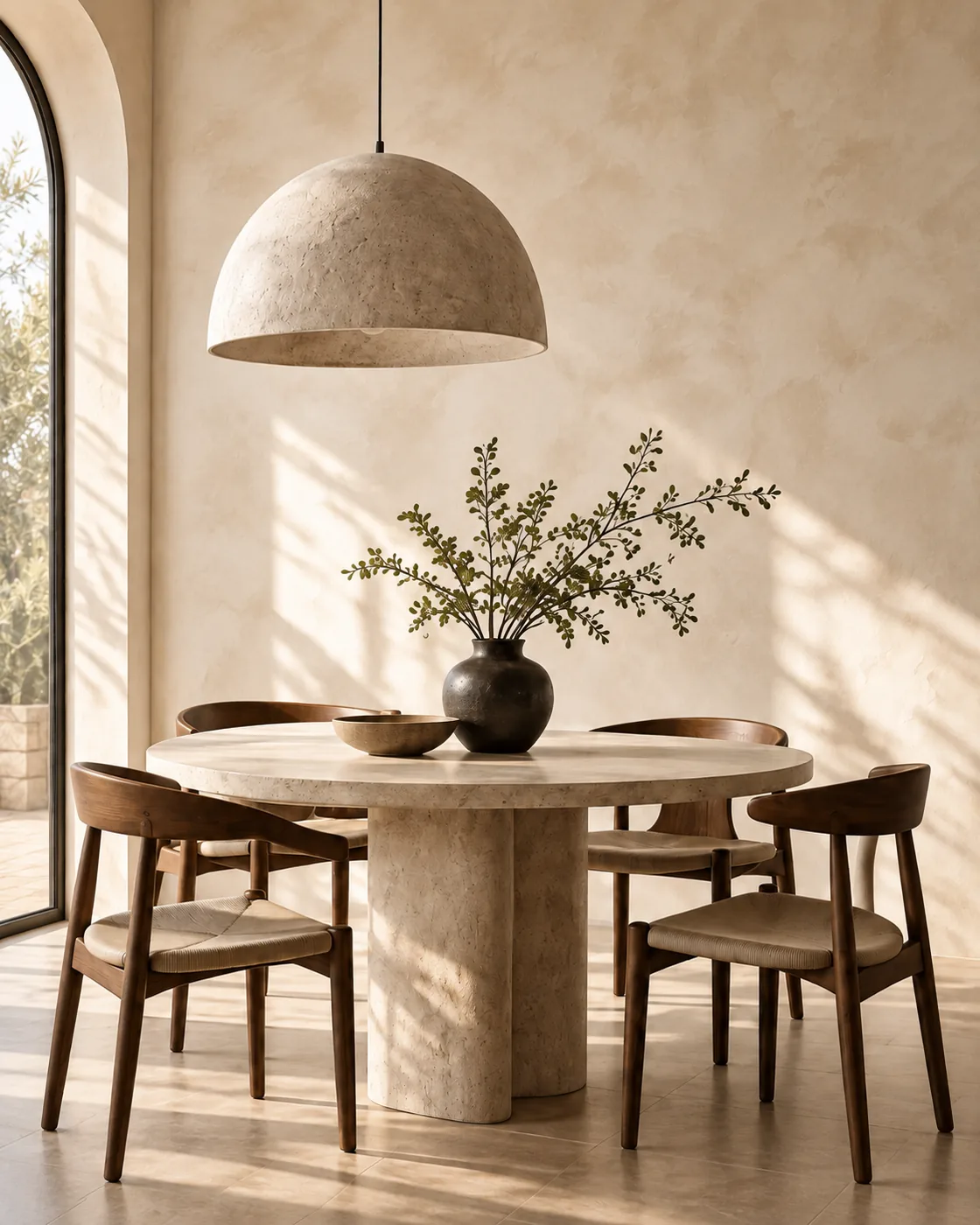
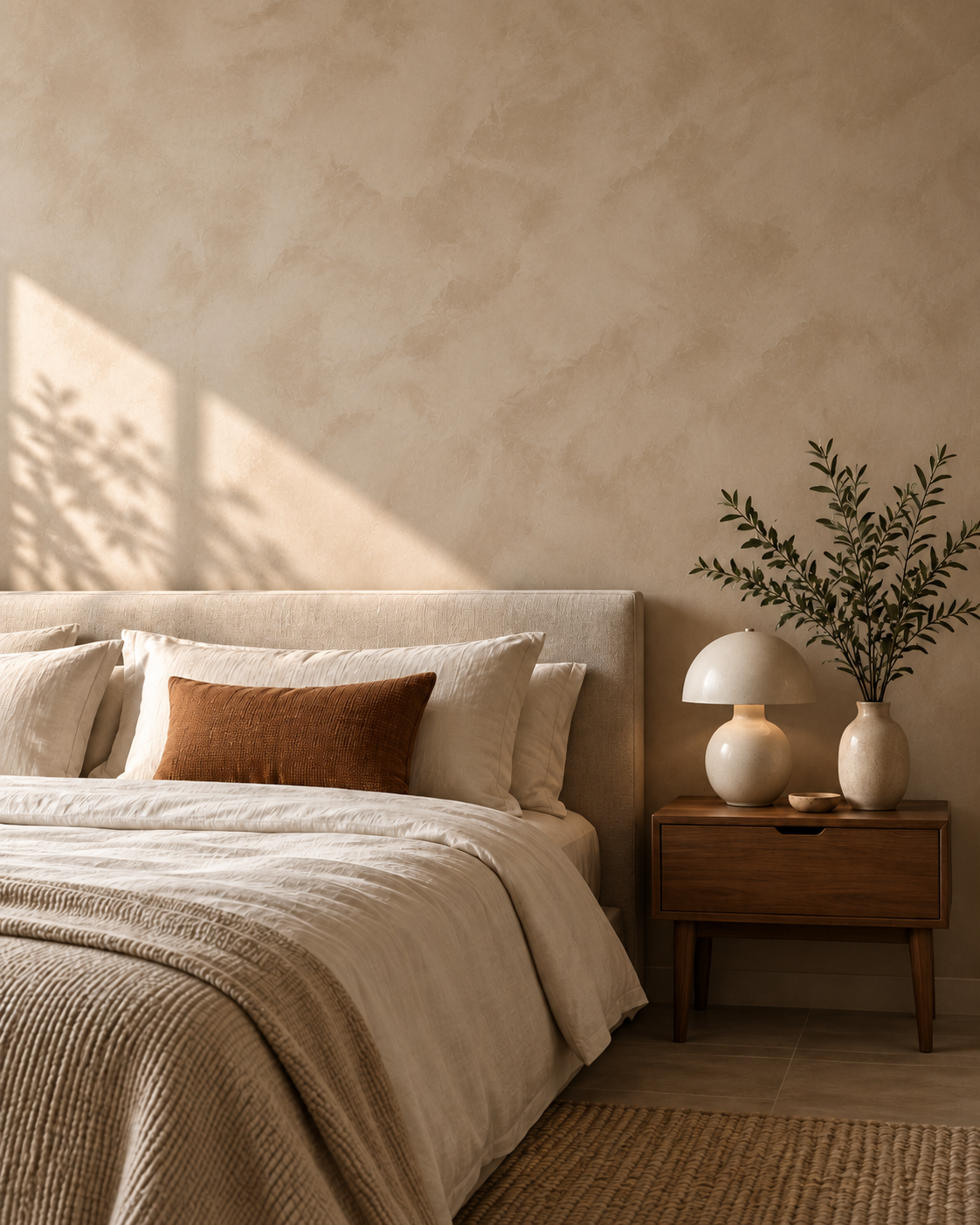
Limewash is brushed on in loose, crossing strokes. As each coat dries, it lightens and settles unevenly, so the wall has soft clouds of colour instead of one flat tone. The finish is always matte. In strong side light it can look almost like suede.
Why it is popular in Toronto
It suits both old and new homes
In Victorian and Edwardian houses in neighbourhoods like The Annex or Cabbagetown, Limewash works with original plaster and brick. In new builds, it softens flat drywall and makes rooms feel less sterile.
It is low in VOCs
Lime-based paints have very low or zero VOC content and little smell, which is why people choose them for bedrooms and nurseries.
It lets walls breathe
Limewash is vapour-open, so moisture in the wall can escape rather than getting trapped under a film. That helps on older masonry and plaster.
It resists mould
Lime is strongly alkaline, which makes it hard for mould to grow on the surface.
Earthy colours
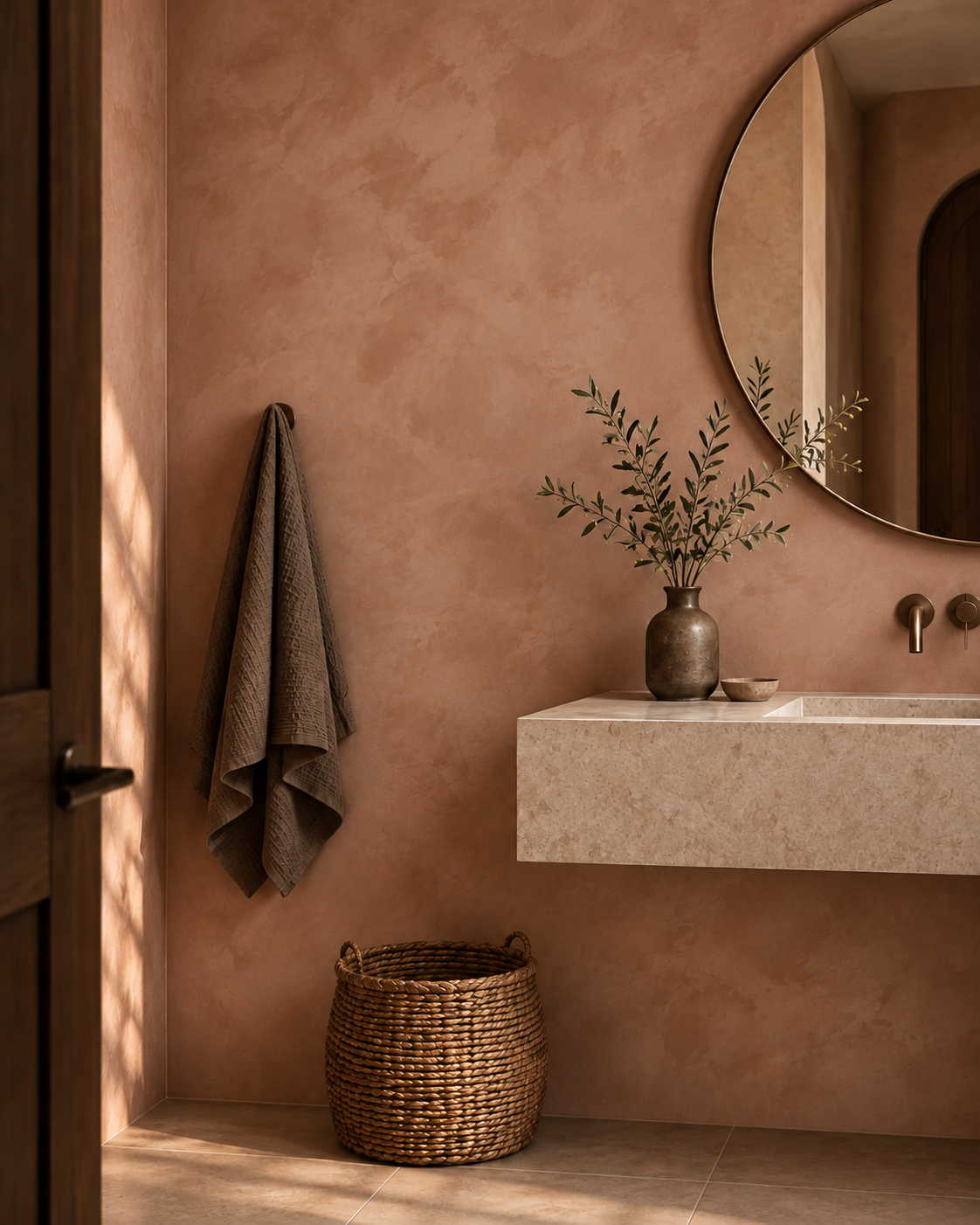
The pigments are mineral, so the palette leans towards warm whites, sand, greige, sage, ochre and terracotta. These colours pair well with oak, linen and stone.
Where Limewash works best
Living rooms and dining rooms
Bedrooms and nurseries
Stairwells and curved walls
Exposed brick and older plaster
Ceilings, where a soft texture hides small flaws
It is not right for showers or splash zones, where water would wear it away. For those areas we use Microcement instead.
Can it go over painted walls?
Yes, with preparation. Painted drywall gets a mineral primer first, so the Limewash has a porous surface to grip.
Looking after Limewash
Dust with a soft cloth and spot-clean gently. Do not scrub. Keep a small amount of the original batch for touch-ups. Our Limewash pricing guide explains what a project costs, and you can request a free quote to see samples in your own light.
Frequently asked questions
What is Limewash Paint made of?
Slaked lime, water and natural earth or mineral pigments. Some modern versions add a little binder to help it stick to drywall.
Is Limewash Paint safe for bedrooms?
Yes. Lime-based paints are very low in VOCs and have little smell, which is why they are often chosen for bedrooms and nurseries.
Can Limewash be used in a bathroom?
It can be used on bathroom walls away from direct water, but not in showers or splash zones, where it would wear away.
Does Limewash Paint come off?
Limewash can rub slightly on darker colours and should not be scrubbed. Small marks are easy to touch up with the original batch.