Is Venetian Plaster Safe for Indoor Air Quality?
Traditional Venetian Plaster is made of lime and marble dust, with very low VOCs once applied. What to check, and how sealers and waxes affect indoor air.

Yes. Traditional Venetian Plaster is made from slaked lime and marble dust, with very low or no VOCs, so it is a good choice for indoor air quality. The things to check are the product itself, since some "Venetian Plaster" products are acrylic-based, and any wax or sealer applied on top.
What Venetian Plaster is made of
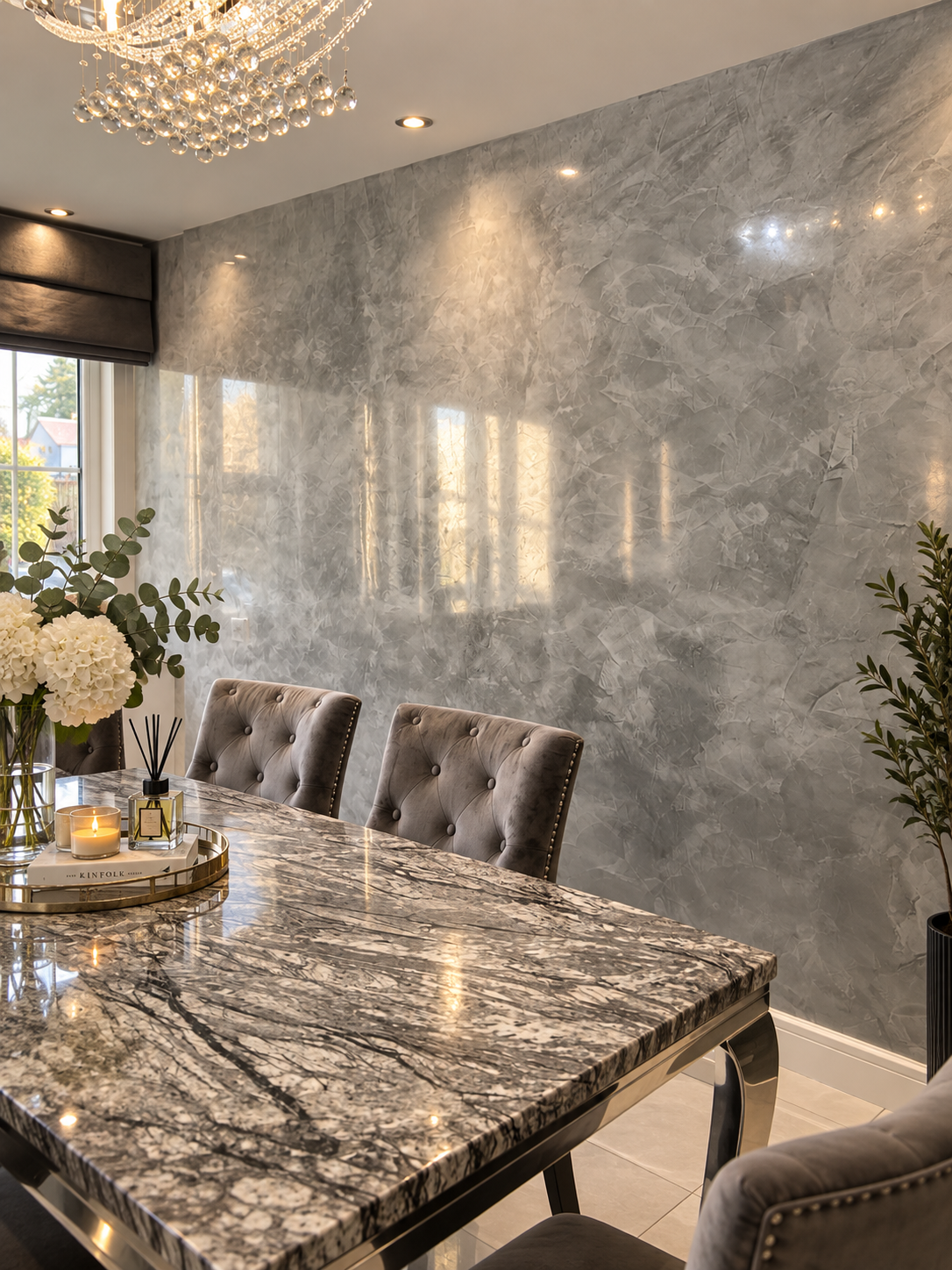
Authentic Venetian Plaster is lime putty mixed with finely ground marble. As it dries, the lime reacts with carbon dioxide in the air and slowly hardens back into calcium carbonate, which is essentially limestone. There are no solvents in the plaster itself.
Lime plaster and acrylic look-alikes
Some products sold as Venetian Plaster use acrylic binders instead of lime. They are easier to apply but form a plastic film, can contain more VOCs and do not breathe in the same way. If indoor air matters to you, ask for the product's technical sheet and check that it is lime-based.
Why lime is good for indoor air
Very low VOCs. Lime plaster gives off almost nothing once it has dried.
Breathable. It lets water vapour pass through the wall, which helps keep humidity steady.
Resists mould. Lime is strongly alkaline, so mould and mildew struggle to grow on it.
No static. The mineral surface does not attract dust the way some plastic paints do.
Sealers and waxes
A polished Venetian Plaster wall is often finished with wax or a protective soap. Natural beeswax and traditional soaps are low in VOCs. Some synthetic sealers contain more. If you have allergies or are finishing a nursery, ask for a natural wax and let the room air out for a day or two afterwards.
During application
Mixing and sanding can create dust, and wet lime is caustic on skin. We protect the room, keep dust down and ventilate while working. Once the plaster has dried, there is no ongoing release of solvents.
Where it works well for healthy rooms
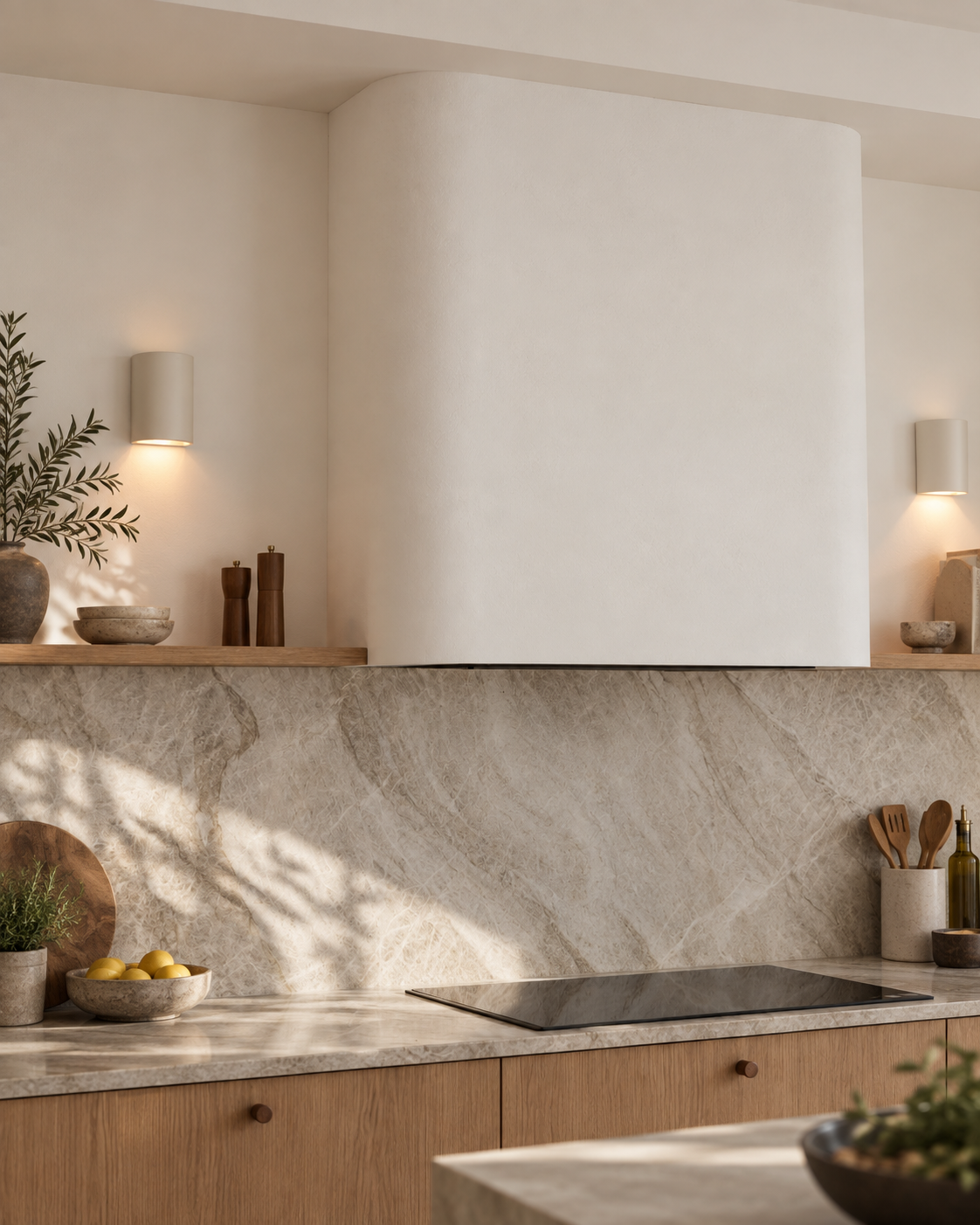
Bedrooms and nurseries, especially in matte Marmorino
Living and dining rooms
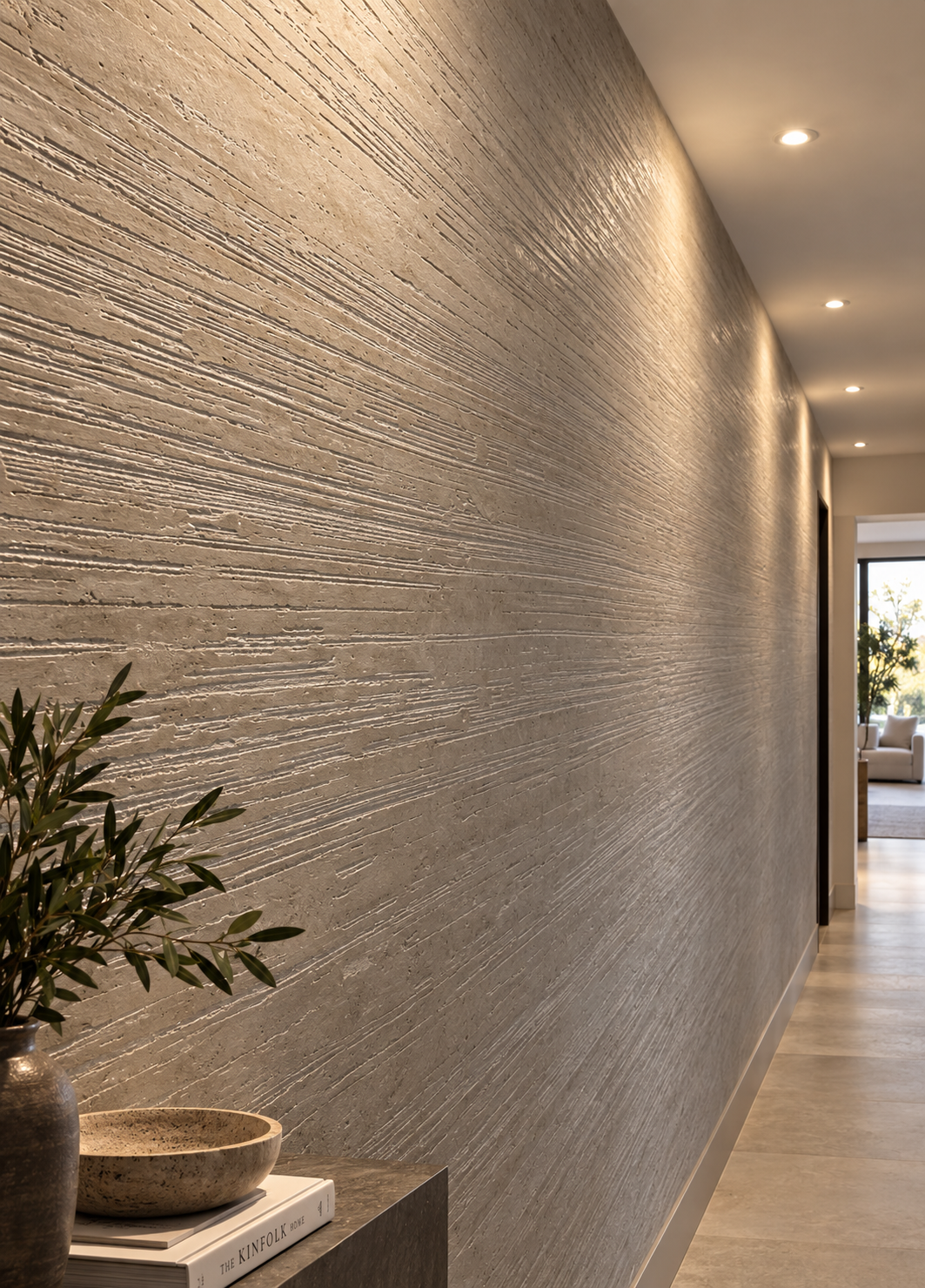
Older homes with plaster walls that need to breathe
For very wet areas such as showers, a sealed Microcement system is usually more practical.
Next step
If you are comparing low-VOC finishes, our guide to Venetian Plaster vs. Limewash may help. You can also request a free quote and ask to see the technical sheets for the products we would use in your home.
Frequently asked questions
Does Venetian Plaster contain VOCs?
Traditional lime-based Venetian Plaster has very low or no VOCs once applied. Some acrylic look-alike products and synthetic sealers contain more, so check the technical sheet.
Is Venetian Plaster safe for a nursery?
Yes, a lime-based plaster with a natural wax finish is a good choice. Let the room air out for a day or two after waxing.